When it comes to producing spectacular concerts, theatre shows, and live events, reliable stage rigging plays a critical role behind the scenes. Entertainment chain hoists are an essential part of many modern rigging systems, helping lift, lower, and position lighting equipment, sound systems, scenery, trusses, and other stage elements with accuracy and control.
At Installation Theatrical Engineering, we understand the importance of dependable rigging equipment in creating safe, efficient, and professional performance environments.
In this article, we explore five essential facts about entertainment chain hoists to help you better understand their applications, benefits, safety considerations, and role in modern stage rigging.
1. What Is an Entertainment Chain Hoist?
An entertainment chain hoist is a motorised lifting device specifically designed for applications within the entertainment and live events industry. Unlike conventional industrial lifting equipment, entertainment hoists are designed with the requirements of theatres, concert venues, touring productions, and event spaces in mind.
These hoists use an electric motor and steel load chain to raise and lower equipment such as lighting trusses, speakers, scenic elements, banners, and stage structures. Their controlled operation makes them suitable for both temporary productions, including concerts and touring events, and permanent installations in theatres, arenas, and performance venues.
Depending on the application, hoists can provide smooth and controlled movement while helping production teams position equipment accurately and efficiently.
2. Why Are Safety Standards So Important?
Safety is one of the most important considerations when working with overhead stage rigging. Equipment suspended above performers, crew members, and audiences must be correctly selected, installed, inspected, and operated.
Entertainment chain hoists may incorporate a range of safety features, depending on the model and application, including:
Overload protection to help prevent lifting loads beyond the hoist's rated capacity.
Braking systems designed to control and hold suspended loads.
Limit switches to control the movement range of the hoist.
Emergency controls and safety systems where required by the installation.
Load monitoring and control features on suitable advanced systems.
It is important to select equipment that meets the applicable Australian standards, manufacturer requirements, and venue-specific safety procedures. Professional design, installation, inspection, and maintenance can also help ensure that the complete rigging system operates safely and reliably.
Working with an experienced theatrical engineering company such as Installation Theatrical Engineering can help ensure that your rigging solution is properly planned and suited to the requirements of your venue.
3. What Are the Main Benefits of Entertainment Chain Hoists?
Entertainment chain hoists provide several advantages for stage productions and event applications. They can make it easier to move heavy equipment while improving efficiency and control during setup, rehearsals, and performances.
Precision
Motorised hoists allow equipment to be raised and lowered in a controlled manner, making it easier to position lighting, trusses, speakers, and scenic elements accurately.
Speed
Hoists can significantly reduce the time required to position stage equipment compared with manual lifting methods. This can be particularly useful during event setup, rehearsals, and venue changeovers.
Load Capacity
Depending on the model and configuration, entertainment hoists are available for different load requirements. Selecting the correct rated capacity is essential for safe and reliable operation.
Consistent Operation
Motorised lifting systems can provide repeatable movement, which is particularly valuable for productions where equipment needs to be positioned consistently from one performance to another.
For example, a theatre production may use chain hoists to move scenic elements or lighting equipment between different positions. This can help production teams achieve efficient scene changes while maintaining the visual experience for the audience.
4. How Do You Choose the Right Chain Hoist?
Selecting the right entertainment chain hoist requires careful consideration of the application and the overall rigging system. Choosing equipment based solely on lifting capacity may not be sufficient.
Some of the key factors to consider include:
Load Capacity
Determine the total weight of the equipment that needs to be lifted and ensure the selected hoist is appropriately rated for the application. The complete rigging arrangement and required safety factors should also be considered.
Lifting Speed
Different productions may require different lifting speeds. Faster movement may be useful during event setup, while controlled movement can be more appropriate for certain theatrical applications.
Power Requirements
Check the electrical requirements of the hoist and ensure the venue can provide the appropriate power supply.
Control Requirements
Consider whether the hoists will be operated individually or as part of a coordinated system. Multiple hoists may require suitable control equipment for synchronised operation.
Installation Environment
The venue structure, rigging points, available space, operating conditions, and frequency of use should all be considered before selecting equipment.
An experienced theatrical engineering provider can assess these requirements and help develop a hoist solution that suits the venue, application, and project requirements.
5. How Do Chain Hoists Integrate With Stage Rigging Systems?
An entertainment chain hoist is only one component of a complete stage rigging solution. For reliable operation, it may need to work alongside other equipment, including rigging points, trusses, control systems, suspension equipment, safety devices, and stage machinery.
Proper system integration helps ensure that each component works together effectively. The supporting structure and rigging points must also be suitable for the intended loads and application.
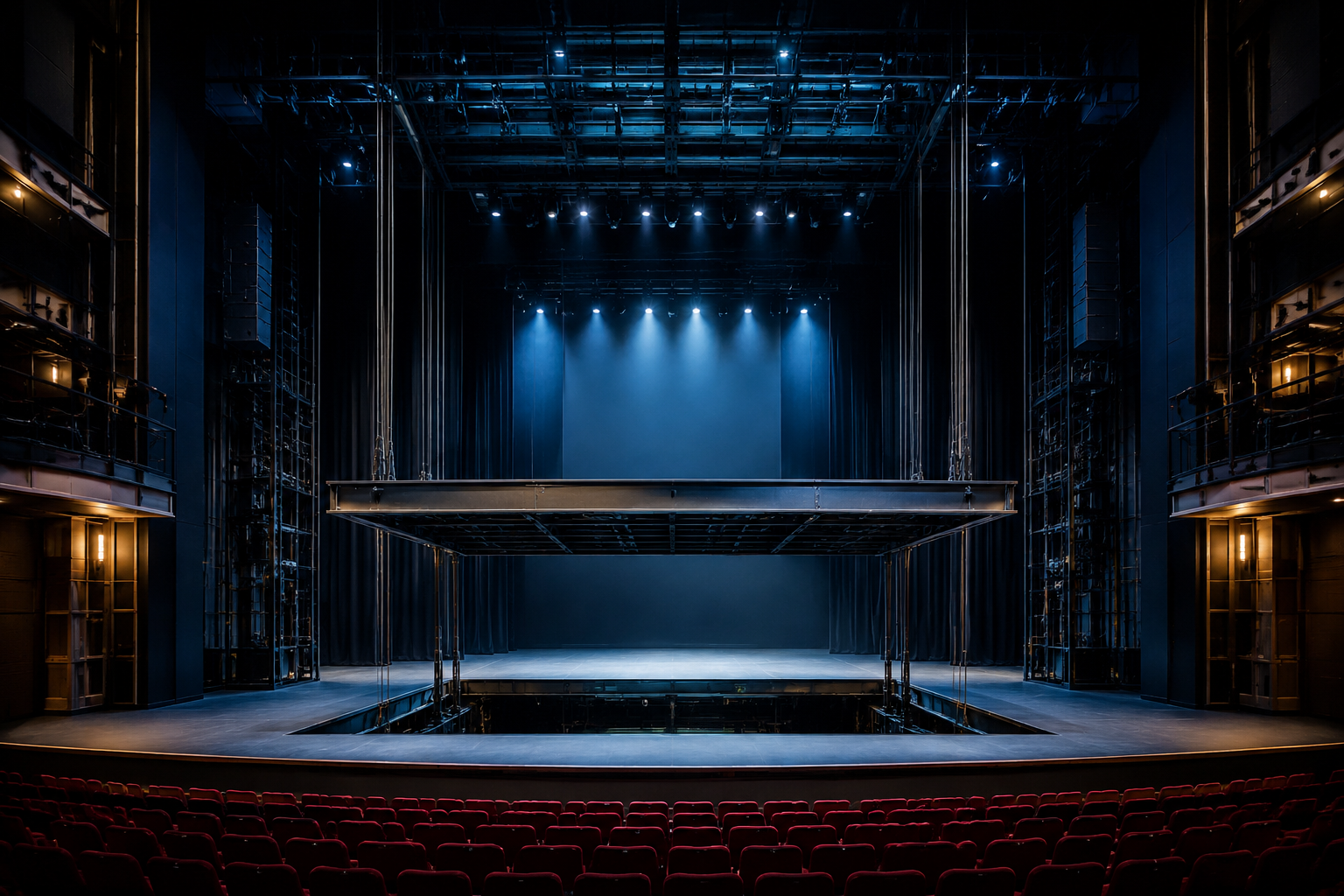
For example, a theatre may use chain hoists to position lighting trusses while stage curtains conceal equipment movements or scene changes. In concert environments, hoists can help position lighting and audio equipment at the required height before or during an event.
Professional design and installation are important to ensure that the complete system is appropriately configured rather than treating the hoist as an isolated piece of equipment.
Maintenance and Inspection for Long-Term Performance
Regular maintenance is essential for keeping entertainment chain hoists operating safely and reliably. Frequent use, heavy loads, and demanding production environments can contribute to equipment wear over time.
Routine inspections and servicing may include:
Checking the chain for signs of wear, damage, or deformation.
Inspecting electrical components and connections.
Checking brakes and limit switches.
Inspecting hooks and other load-bearing components.
Lubricating components where recommended by the manufacturer.
Checking control systems and operational functions.
Identifying unusual sounds, movement, or performance issues.
The appropriate inspection and maintenance schedule will depend on the equipment, frequency of use, operating environment, manufacturer recommendations, and applicable requirements.
At Installation Theatrical Engineering, professional maintenance and servicing can help venues keep their stage equipment performing reliably and identify potential issues before they become major problems.
Final Thoughts
Entertainment chain hoists are an important part of modern stage and event rigging systems. From positioning lighting trusses and audio equipment to supporting scenic elements, they provide controlled and efficient lifting for a wide range of entertainment applications.
Understanding how chain hoists work, their safety considerations, key benefits, selection requirements, and integration with other stage equipment can help you make better decisions when planning a theatre, concert, or event rigging system.
Whether you are developing a new performance venue, upgrading an existing theatre, or preparing equipment for a touring production, choosing the right rigging equipment and working with experienced theatrical engineering professionals can help create a safe, reliable, and efficient stage environment.
Contact Installation Theatrical Engineering to discuss your stage rigging, hoist, and theatrical engineering requirements.




Write a comment ...